Physically-challenged Development Foundation (PDF)

Introduction and Background

Section: 1

What is PDF Summer Challenge?

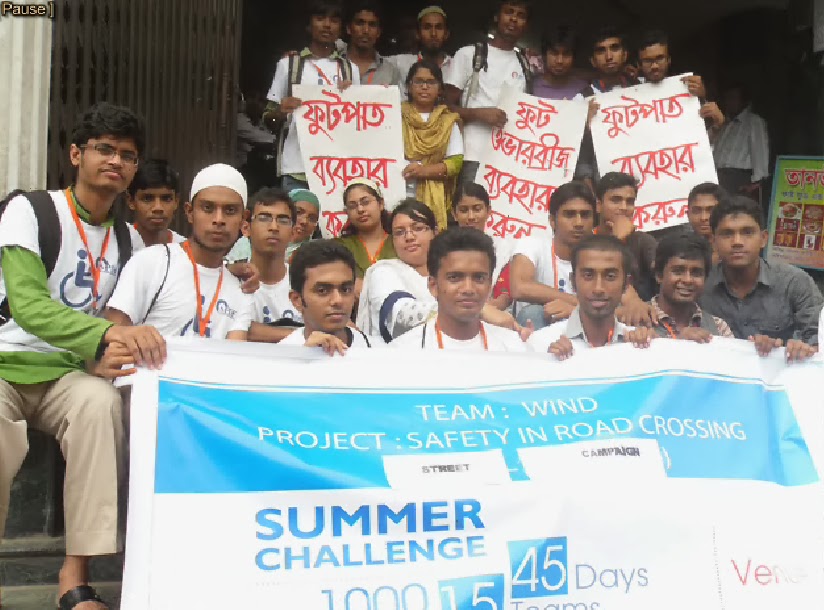
1.  The SUMMER CHALLENGE is a 45-days long event where 15 teams of young participants will compete with each other through designing and implementing their own community projects under the supervision of one coordinator and two mentors each. And they will carry out their individual projects and receive accolades for the creativity, determination, and skills they will be able to demonstrate. 

Purpose of PDF Summer Challenge:

The main goal of the ‘PDF Summer Challenge’ is to promote active involvement of youth in society, so that they can be the agents for establishing the rights of the physically-challenged community. The first step towards that is to make the youth acknowledge their potential for community service.

By assigning the teams to carry out 30 sub-projects, it aims to make the participants aware of their current potential for contribution to the deprived and underprivileged communities, thus leading to grow a sense of responsibility in the youths for contribution to the society regardless of their present standpoint. Furthermore, each of these small-scale projects targets beneficiaries from a variety of different backgrounds and each team will directly assist approximately 50 people, whether carrying out a distribution project, or by organizing a social event, etc.

Therefore, in concurrency with instigating the youth to cultivate a personal concern for the society, the ‘PDF Summer Challenge’ is also proposing to assist a number of indigent Bangladeshis through the enthusiasm of its young volunteers.

At the end of the day, this objective of this Summer Challenge is to harness the youth for using their skills and eagerness for social work in strengthening PDF as a pressure group working for the rights of the physically-challenged.PDF has always given the due recognition to these individuals who have been proven capable of leading the way forward in promotion of the rights of the disabled through the dedication, creativity and earnestness in their performance in the yearly Summer Challenge.

Key stakeholders:

a) PDF Executive body- The EB will be involved in selection of the best proposal. They will be responsible for supporting the implementation of the project and overseeing its progress. There will be coordinators and mentors from PDF, who will be accessed for providing feedback and help students in making their project more visible to a wider community and in involving the media.

Teams- Students will implement the project, while keeping focus on delivering the necessity of creating opportunities for the physically-challenged community.
c) Volunteers-teams can engage as many volunteers as they think fit to make their project have a wider impact or be more successful. Volunteers can come from all walks of life as long as they are aged above 15.

Especial sponsor: 

PDF will form 15 especial sponsor teams in 15 different educational institutions in USA, UK, Canada, Korea and others country. These teams will raise fund as much as they can to support the selected teams of the PDF summer challenge 2014. Each especial sponsor team is free to choose which project they will support. PDF summer challenge 2014 will share wwith them the selected 15 project detail with the team.

Section 2: Implementation Guidelines

The ‘PDF Summer Challenge’ has been divided into five concise levels of procedure. A timeline and a list of procedures has been distributed among the teams to aid them through their individual projects; also, two mentors and a coordinator, with past experience in organizing community-based projects, have been assigned to each team.
The five levels are namely the ‘introductory level’, the ‘initiation level’, the ‘fuel-gathering level’, the ‘implementation level’, and the ‘concluding level’

GAME PLAN

Section: 2 

LEVEL ONE [Introductory level]

a) Day one, Project Placement

Each team has to successfully participate in all the events and sessions of that day.

b) Day two, planning

To make a feasible plan of a small scale community based project together in a team. The project should be self funded and can be either awareness building campaign or a way to directly help the needy disables people (Team are free to choose them from CRP, PDF Light House or any where you can).

c)      Draft presentation.

Each team will be provided with a chart paper, where they will have to include the project outline.

  • Name if the Team leader
  • Project name
  • Project theme
  • Team members
  • How and where they will raise the fund
  • Why this project
  • Probable date
  • How many people will be benefited
  • Fund raising budget [approximate]
  • Project budget [approximate]
  • Saving budget For Scholarship under LightHouse Project. [Approximate].

After the planning the teams will be called to the stage to demonstrate their planning.

LEVEL TWO [Initiation level]

a)      Stage one, Group formation

  • Each team will form an expanded group of ten members by adding six new members.
  • Team members can be replaced if necessary.

b)  Stage two, Initiation

  • The team members will be  introduced with each other.
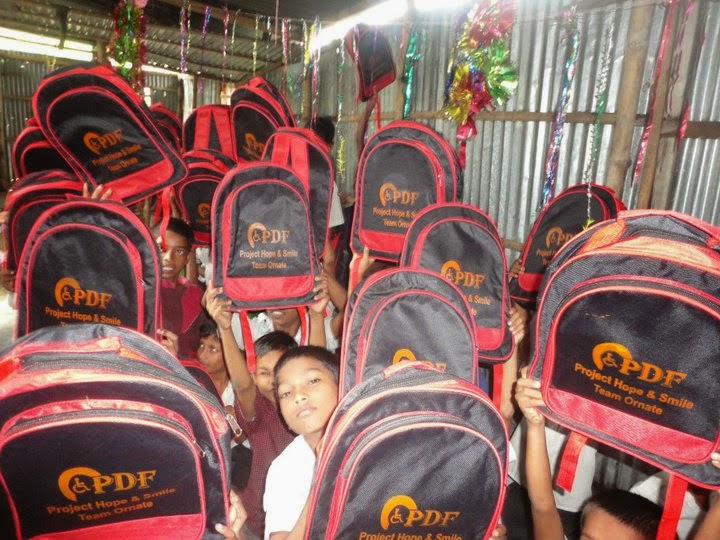
  • The team will gear up by distributing the brand new t-shirt/food/or any gift among the disabled students.
  • A single photograph of the distribution must be posted on the facebook group wall with approval from the admin.

LEVEL THREE [Fuel Gathering Level]

a)      Stage one, Fund raising strategies

  •  The team members will make a detail plan on how to raise fund
  • The team will distribute work among the members according to their budget.
  • The teams are free to reorganize their budget as they deem necessary

b)      Stage two, Fundraising

  • Teams can collect fund group wise from their institutions or from individuals, friends and relatives. No corporate or institutional sponsorships are allowed.

LEVEL FOUR [Implementation level]

a)      Stage one, Project Planning

  • After the successful completion of fundraising, each team will make a detailed plan for their project and make modifications to their initial plan to synchronize it with the collected amount of funds.
  • Their project plan must include
    i.    Location for carrying out the project       
    ii.   Target people to be served through this project
  • Project plan has to be submitted for confirmation from PDF.
  • Participants are allowed to advertise on virtualnetworking sites for volunteers and further support. 

b)      Stage two, Project Implementation

  •  Must invite one senior member from CRP-PDF zone.
  • During the project, presence of a teacher will earn an extra credit.
  • During the project, presence of a guardian will earn an extra credit.
  • The number of extra volunteers will earn extra credits.

LEVEL FIVE [Final level]

a)      Stage one, Presentation Planning

  • Must make a 3 minute presentation on the whole event.

b)      Stage two, Final Presentation.

  • Demonstration.

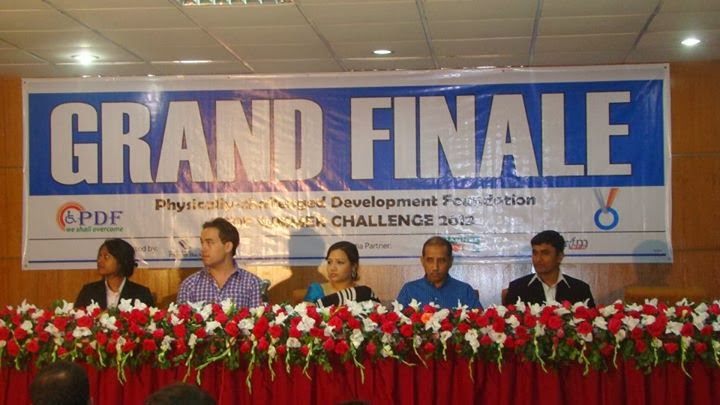
c)      Prize giving ceremony. On the ceremony five teams will be awarded.

  • Most popular project.
  • Most fund raising project.
  • Project with most volunteers.
  • Project with most service provided.
  • Best project.

Evaluation Criteria

Section: 3

Evaluation and grading of the projects will be based on the relative competence of the teams in terms of meeting the following:

  • Sustainability
  • Innovativeness
  • Creative/efficient methods for fundraising
  • Inclusion of volunteers/team members who are physically challenged
  • The best team

Fundraising Regulation

Appropriate Method for Collection of MONEY and its transparency is extremely important for all the stakeholders involved in the Summer Challenge. Hence all teams and every participant is bound by, but not limited to, the following regulations:

  • Each team has to take a signature on the money receipt provided by PDF for every donation being made, even if a ten taka donation is made.
  • It is mandatory that every taka collected to be properly documented in the money receipts and all the receipts has to be submitted to PDF after execution of the project. So participants must be EXTREMELY CAREFUL with regards to preserving each single receipts for whatever amount of donations are made
  • Corporate/Institutional sponsorship is UNACCEPTABLE. Only individuals, groups, friend circles, relatives, etc can be approached. PDF reserves discretionary rights to disqualify any teams found liable for misinforming any of the donors or using inappropriate means to collect funds.


  • At the end of the project each team have to submit information with detailed proof of three things: Total money collected, Total money spent , Total money saved

Posted 20th April 2014 by